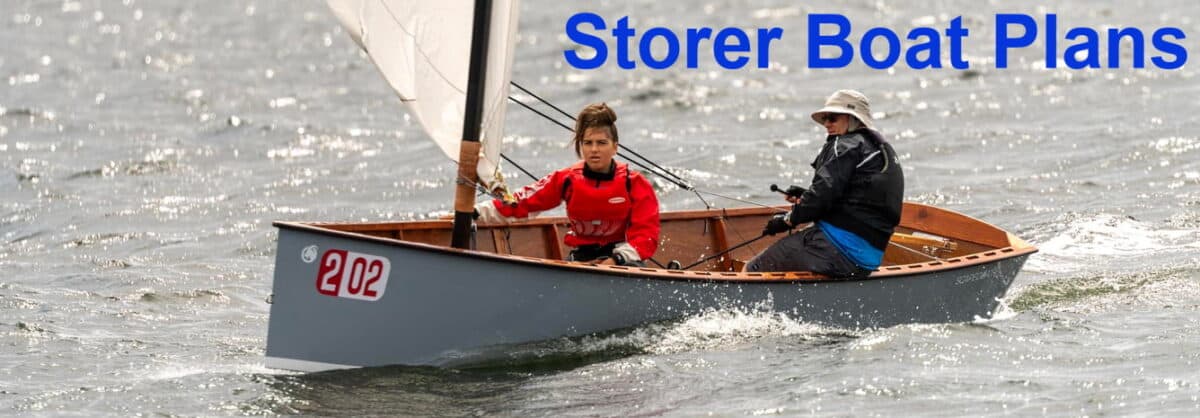
Dories are a part of the great American Maritime Tradition. From the book and film of Captain’s Courageous to all the folklore about fishermen surviving awful conditions at sea in a Dory.
But Do they really stack up to their press? It seems that every few weeks I see a new design for a rowing dory or a sailing dory.
There is some robust discussion below in the comments. It forced me to look for some data to back my viewpoint. I found it.
I have used a few contemporary light, modern dory designs and know quite a few people who have used them for extensive periods. I’ve also researched contemporary accounts.
1. More on Boat Design Issues
2. Boats of Other Times and Places
3. Setting up Archaic Rigs
My feeling is that though there are some very fine dory designs around that in general they were designed for a very specific use – the traditional one – but may not adapt to modern patterns of usage very well.
There is a lot of crap talked about dories.
Here is a google link that searches for websites with the word … dory plan seaworthy
http://www.google.com.au/search?q=dory+seaworthy+plan
There are hundreds of sites that link these different words but most of the writers don’t have enough knowledge to give that type of advice. Dories from 8ft to 30 or more feet. They just say what other people say – the internet was ever thus.
Traditionally built dories can be comparitively seaworthy – but the shortened, lightweight modern versions don’t come close.
Dories have two advantages compared with more rounded hullforms of their era.
- Much easier to build but still row well despite the simplified hullform.
- They can stack inside each other on deck of a fishing schooner.
On the downside they are NOTORIOUSLY unstable until you get half a load of fish aboard – ie up to seat level. There are some mentions in traditional material that this was great for a commercial fishing vessel as there was a great incentive to catch fish quickly.

Despite the many times someone has survived awful conditions in a dory, boat and man loss through sinking and drowning on the Grand Banks was common – a hugely risky, highly skilled undertaking as it was in any open sea fishery during the era of sail and oar.
The dories of that era gained much of their stability from their size and weight – look how heavy the boat’s structure is in Winslaw Homer’s painting above.
How Reported Experience of Traditional Dories becomes Skewed
A question was asked if I had ever spoken to an old time Doryman.
Of course, if I was he (probably) would have something to say about the Dory saving his life. As it may have. But we have no way of questioning those who drowned or disappeared.
One of the big surprises looking through the monthly reports from one busy harbour (Gloucester) is that the chances of drowning through capsize were far greater than dories going astray in fog.
If reading several sources they emphasise the main risk was “going astray” in fog. But the data does not back that up. Dig through and the deaths from capsize greatly outnumber the loss of life from going astray.
Where does stability come from
Two of the main factors that give a boat stability are:-
1/ Weight – Building building a really lightweight dory will usually mean stability is difficult to achieve. It is easy enough to build a modern boat very lightly without sacrificing strength. My 16ft rowboat design has a similar capacity to a dory but can be built at a weight of around 80lbs (35kg) – whereas a traditional dory of similar length would probably come in around three times that weight.In very rough terms the stability is in line with the weight. A traditionally built dory with crew – roughly 450lbs all up. A modern lightweight dory hull of the same size and shape with crew – roughly 280lbs. Stability of the lighter dory will be 280/450 = 0.62. The modern boat will be 40% less stable then the traditional one.2/ Size – Building a small dory will usually mean low stability. Most of the traditional dories were grouped by the length of their bottom panel – so a 15ft boat would have been around 20ft long. Scale it down to 15 feet from bow to stern and there is a dramatic reduction of the already low stability.Stability is made up of multiplying the length by the beam by the beam squared ie LB3. So if length and beam are reduced to 75% of the original then the stability will be 0.75 x 0.752 = 0.317 of the larger boat. STABILITY IS REDUCED BY OVER 2/3.
The two stability factors will multiply out – so if you take a traditional 15ft dory (ie 15ft long bottom panel, but a total length of 20ft) and shrink it down to a total length of 16ft as well as make it lightweight through modern building methods the result is that stability is 0.62 x 0.317 = 0.197. The stability of the smaller modern boat compared to the larger original is 80% less.
Consider too that the traditional dory form is not noted for its stability in the first place but smaller lighter dories are much less stable in comparison..
A nice modern dory
That doesn’t mean that there are not some good smaller dories around – but it takes a great designer to get them close to working well. Phil Bolger’s Light Dory is a wonderful example.


My friend David Wilson built a Bolger Light Dory. He’s a very experienced boat builder and user his summary was
1/ Beautiful to row in the flat.
2/ It gave the feeling of being able to row it all day with little effort
3/ Quite unstable, but it was OK in smooth water, but feels unstable as the water gets rough.
4/ Blows around badly in a breeze
5/ Goes badly out of trim with a passenger in the back seat unless the rower sits in the bow and accepts the cramped rowing position because of the smaller breadth of the boat in that area.
6/ A bit heavy for a single person to manage easily on shore.He did use it a lot and liked the boat a great deal for its good qualities. Riverwork was great with a friend in the stern seat being balanced by the camping gear in the bow. Pulled easily even with significant weight aboardHere is an image of my rowboat with Bolger’s Light Dory superimposed (dotted lines). Both boats are very close to the same size.
Note the width of the bottom of the rowboat – compared to the dory – that indicates where the Dory’s deficit in stablity is.. Also note that the rowboat has an equally fine bow.
The greater length of the rowboat will give a higher top speed.
This doesn’t mean my rowboat design is better. It has a different set of advantages and disadvantages – but it does have adequate stability and retains an excellent turn of speed – which is what the two instigators of the design want.
The Storer Rowboat wouldn’t suit the way D. Wilson was using his boat above – it is designed to travel fast when lightly laden. It will take a passenger and has an alternative rowing position to keep the boat in trim. The combination of the wider stern and the finer bow means that a passenger doesn’t make the stern squat too much with the passenger, but if the oarsperson moves slightly forward the fine bow depresses easily bringing the boat in to trim.
“Kinda, Sorta” Dories
There are lots of clinker sided boats called “Dories” that have the flat bottom of the original coupled with rounded clinker planked sides. These have more the stability of a conventional dinghy but don’t have the true dory’s simplicity of build.

The smaller they are the more they have to resemble transomed dinghys to get adequate stability. As you can see from the picture here of a 10ft Chaisson Dory it has a dinghy style transom and hull cross-section. It also has lost the feature of having a canoe stern at the waterline. A lovely little boat, but a dory in name only.
And DON’T get me started on Sailing Dories :-) Any of them that work are sailing dinghy uppers with a dory bottom panel only but highly rounded topsides above that – either that or heaps of ballast.
A small rowing dory is hard to design well – a sailing dory is much more difficult as it sails on its stability.
There are no absolutely good types of boat or bad ones – but it is important to pick the right one for the use.
Enough rant!
The story of the 20lb Dory
I mentioned this article to my boatbuilding mate Peter Hyndman. He was involved in high performance multihulls during the ’80s – mostly building incredibly light ocean going boats in foam sandwich and kevlar.
30ft hulls that one person could lift off the mould.
One of the people involved in the cat building decided to build a dory using the same technology as his bigger boat. It was really quick to bend the slabs of foam into the dory shape and glass them up. The end result was a 16ft boat that weighed in at 20lbs (9kg).When they put it in the water it floated feather-like – just touching the surface – but they found that no-one could get in – it was like a bucking bronco – the slightest pressure off centre – a touch on the gunwale and it would go over.The upshot was that they ended up pouring 2 inches of concrete in the bottom and glassing it over. It now weighed more than a conventional dinghy, but at least it was possible to get into it. Rowed rather nicely though.
