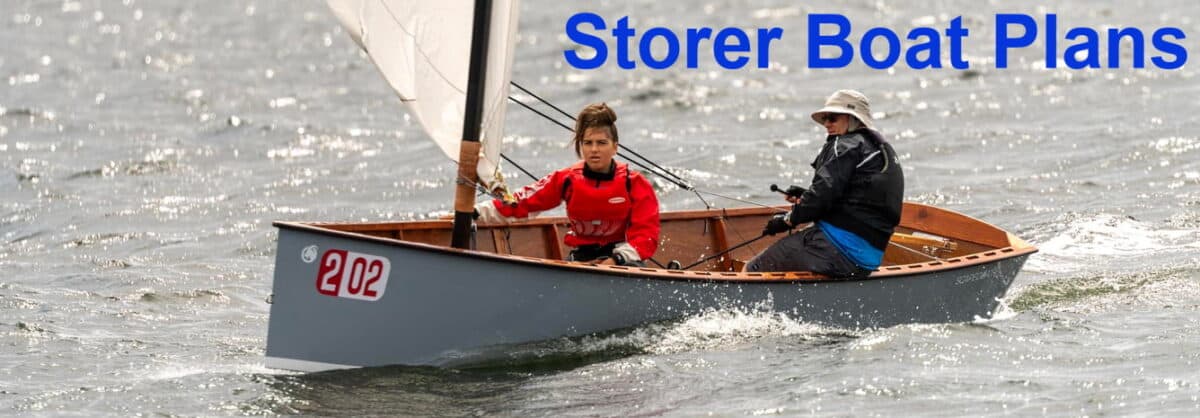
If you have trouble tacking your sailing dinghy or get your head hit by the boom then probably making one of the mistakes in the text below. Once you understand efficient tacking technique the boat will spin on a dime. It has a big sail and it is easy to lose speed by doing the wrong thing. Speed is everything … so how not to lose it …
Video by Roy Espiritu along with his impeccable taste in music.

Video image can take a moment to load.
1/ Don’t sit too far forward to too far back.
Be sitting in line with the butt strap join on the bottom of the hull. Not forward or behind that. For other boats in normal upwind sailing position – not near the back! So whether you are sitting to leeward in light wind or hiking out in stronger wind, be in line with the butt strap or on other boats don’t cram up the back!
Typical Error – Sitting near the back will slow the boat down – even more so when it is going through a tack and the sail won’t be generating power to overcome the drag. Sitting too far forward is not so likely … but if overdone the bow will hit a wave and stop the boat.

2/ Before tacking have plenty of speed.
Just be sailing well. If speed is down just focus on building it up again then tack. Speed is essential for good tacking technique
3/ When you decide to tack stay where you are … do not lean in and do not start to move across the boat.
Do not loosen the sheet, just sail in an arc. Your weight is a motor for the boat. if you move your weight so you not creating power and if you release the sail then the boat will not have enough speed to tack. Keeping feeding in the power is essential for good tacking technique.
Two common errors for body position
Typical Error a/ This includes not ducking for the boom in advance – don’t do it! Just watch it – as you are on the side of the boat it will only come into the middle of the boat. If you move in then you are getting closer to the boom! Stay hiking on the side deck and the boom is a long way away and you can see what is happening. See number four below for when to move.
Typical Error b/ Holding the tiller extension too far down (or worse holding the tiller itself. This means that to push the tiller to the other side you need to bend or move into the boat. Your head is now closer to the boom and your weight is no longer the engine for the boat and it will slow or stop. Slowing means the rudder doesn’t work so well.
4/ Do Not Ease the sail Too Much, Only a couple of feet
We aim to SAIL the boat through the tack. Don’t release too much mainsheet. We basically want the boat to be ready to go when we put our weight on the other side. Again this is about maintenance of speed for good tacking technique.
Two errors for easing the sheet
Typical error 1 – Too much sheet eased means no power to reaccelerate.
Typical error 2 – Too much sheet eased means the boat is oversteered in step 6 and is no longer heading upwind.
5/ When to move your body – when the sail starts flapping.
As the boat sails in an arc the sail will lose power and the boom will come into the middle of the boat. At that time you can finally move your body. Keep the boat turning and put your head under the boom. and then move over to the other side. it is ok to ease the mainsail a couple of feet or half a metre, but no more
Error – Don’t Swap Tiller hand. Almost no high level sailors swap the tiller into the other hand these days. It takes attention off the sail and takes attention off getting a good exit angle from the tack. Watch Roy’s Video below.

Video image can take a moment to load.
6/ keep the boat turning, watch the sail to know when to stop the turn
The sail fills from the back with the area that is luffing at the front getting smaller and smaller and smaller. When the luffing has just disappeared that is your new sailing angle.
Two Typical Errors for poor speed after a tack
Typical Error 1 – being busy swapping hands during the tack so you are watching your hands rather than watching the sail.
Typical Error 2 – Easing the sail too much so there is no power on the new tack.
Fast Tacks = RELIABLE TACKS
And full awareness of what is happening around the boat
Also you know exactly what the boom is doing!!!
Our other Sailing lessons
All Free Online Sailing Lessons – Index
- Sailing Upwind with less effort
- Increase confidence in Stronger Winds
- Downwind with less distress
- Gusts, Gybe and tack easily
- Not hitting other boats and more
