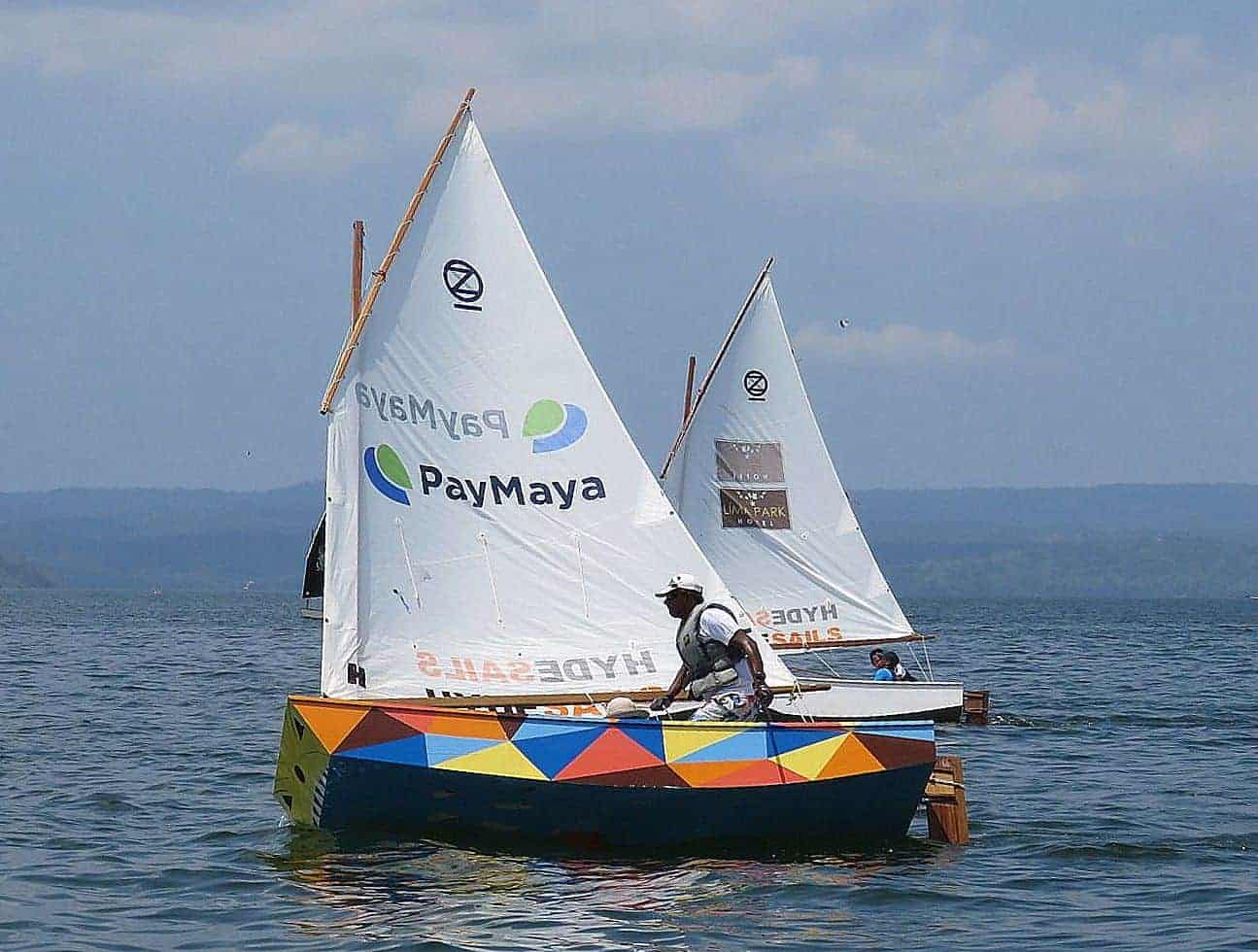
How to Not Get Stuck Tacking or Have the Boom Hit Your Head
Tacking efficiently is as much for safety as it is for racing.
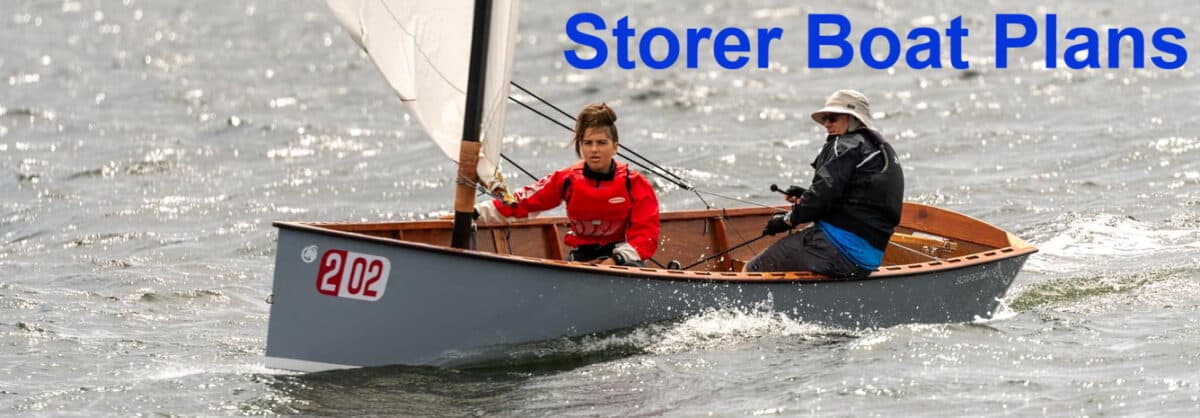
The principle of these free sailing lessons is to throw out as much of the “clutter” and take a fresh look at learning to sail in a simplified but very much more up to date way.
Some of the older methods make it difficult for beginners to handle stronger winds. Happily the best sailors in the world have found methods that make the boat go faster AND ARE MUCH EASIER TO LEARN.
I learned to sail in the early 1970s. To become a better sailor I have had to unlearn old techniques and reprogram myself to use new ones that appeared in the 1990s through to the 2000s.
Upcoming – Windward/Leeward Rule – Two boats with sail on same side.
Tacking efficiently is as much for safety as it is for racing.

Starboard Tack having rights is only the beginning. How to avoid the other boat without messing up your strategy and what is the best choice if a collision is about to happen with boats on opposite tacks.
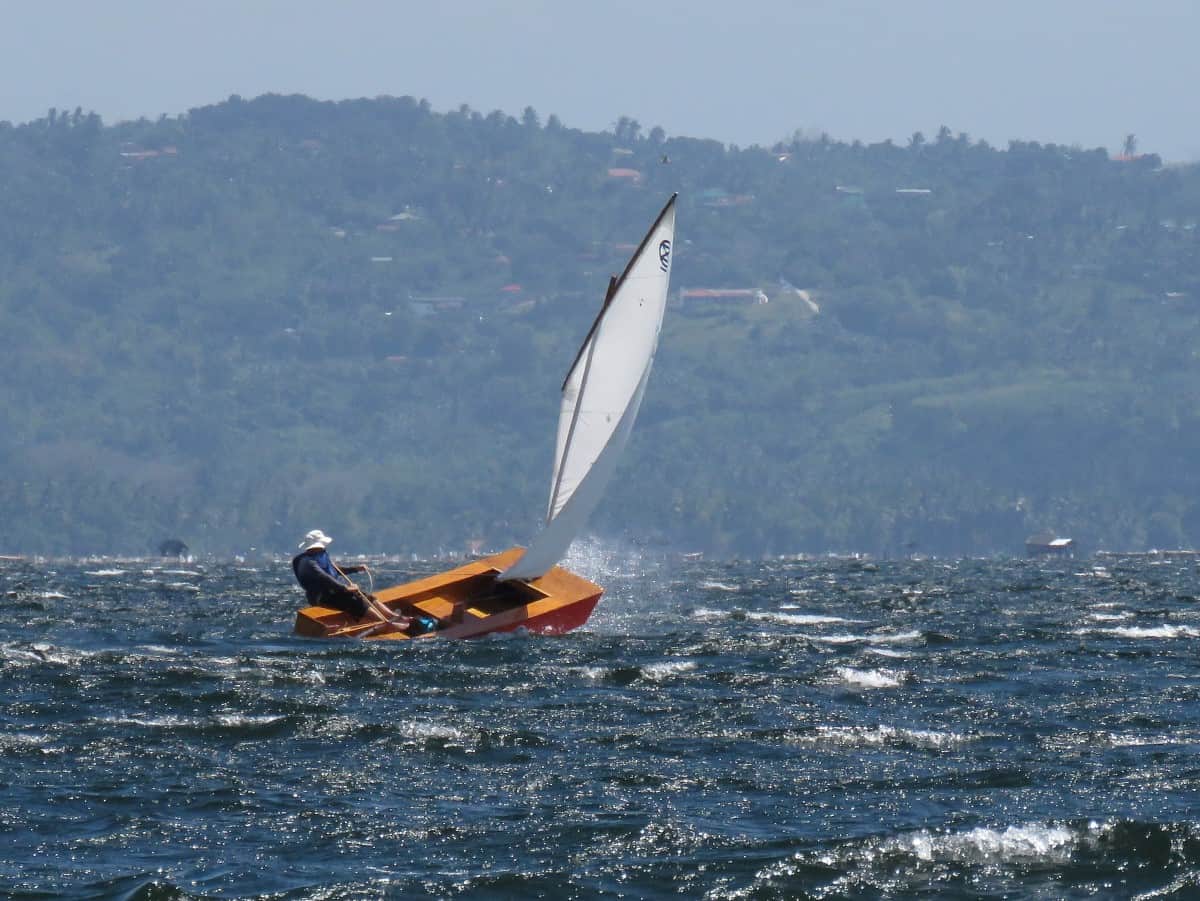
Videos of best speed upwind in the Oz Goose to handle large waves – a video of depowering a lug by reducing the downhaul tension slightly.
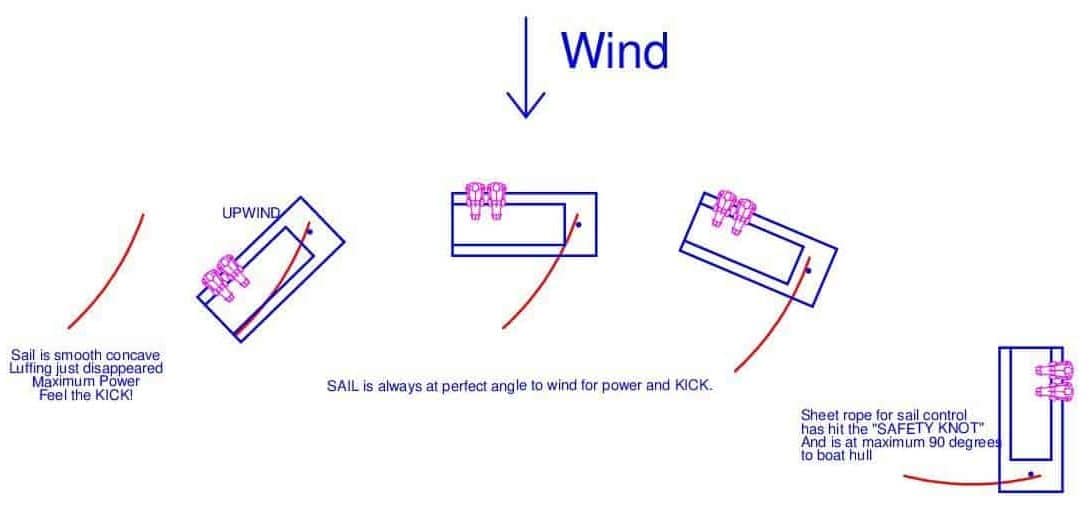
How to get power from the sail quickly and simply in this lesson works on your direct feeling of power and acceleration. Yes! you can FEEL it

Tacking and Gybing can be simplified by prioritising the right parts. More security by delaying swapping hands until the boat is going again for smooth boat handling

Free Sailing Lessons – Prerequisite – Essential first principle of holding the tiller extension correctly so both hands can control the sail.
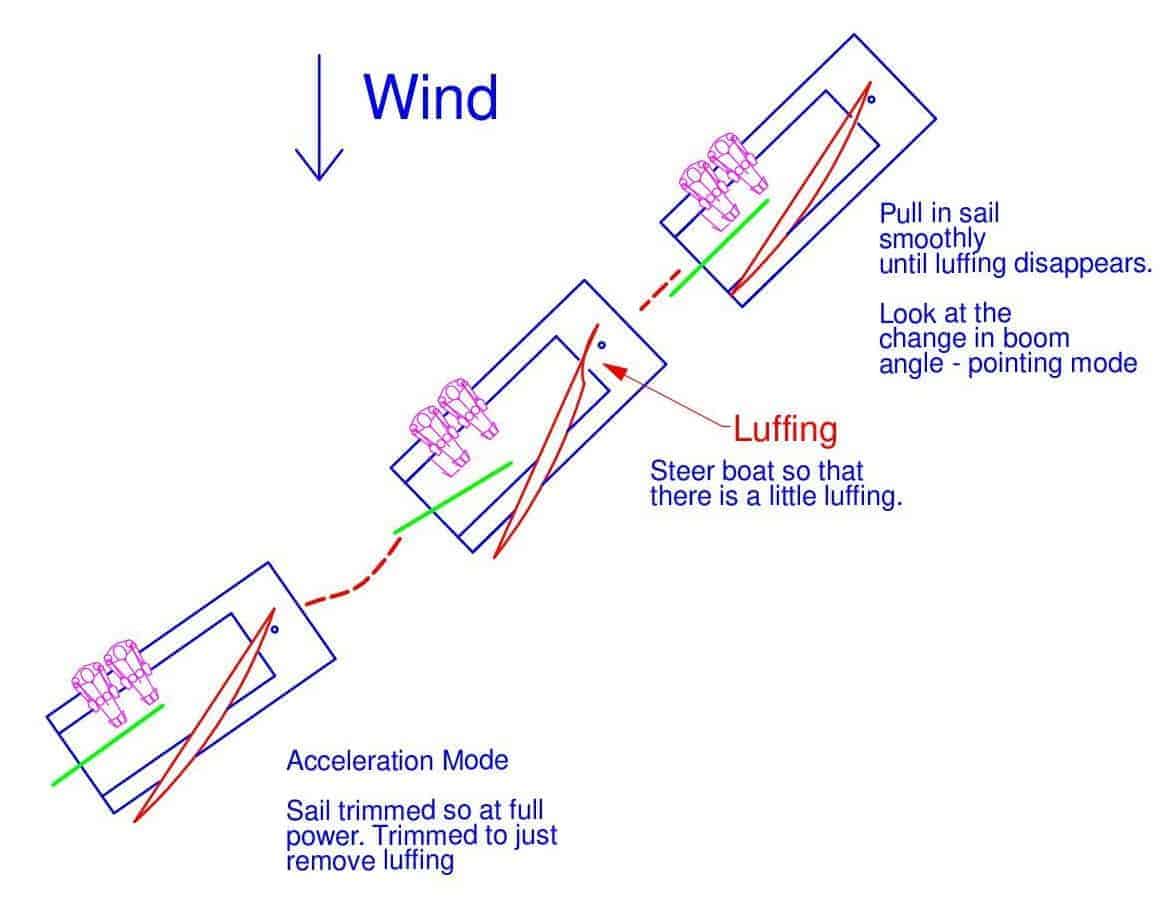
Tutorial on sailing upwind without all the fuss and terminology of normal sailing books. it can be much easier than most books suggest. Even better this will show you how to sail fast and efficiently in moderate winds.

What is the best way to exit the gust? Artilcle expains it is best just to go straight and let the sail luff as luffing usually disappears
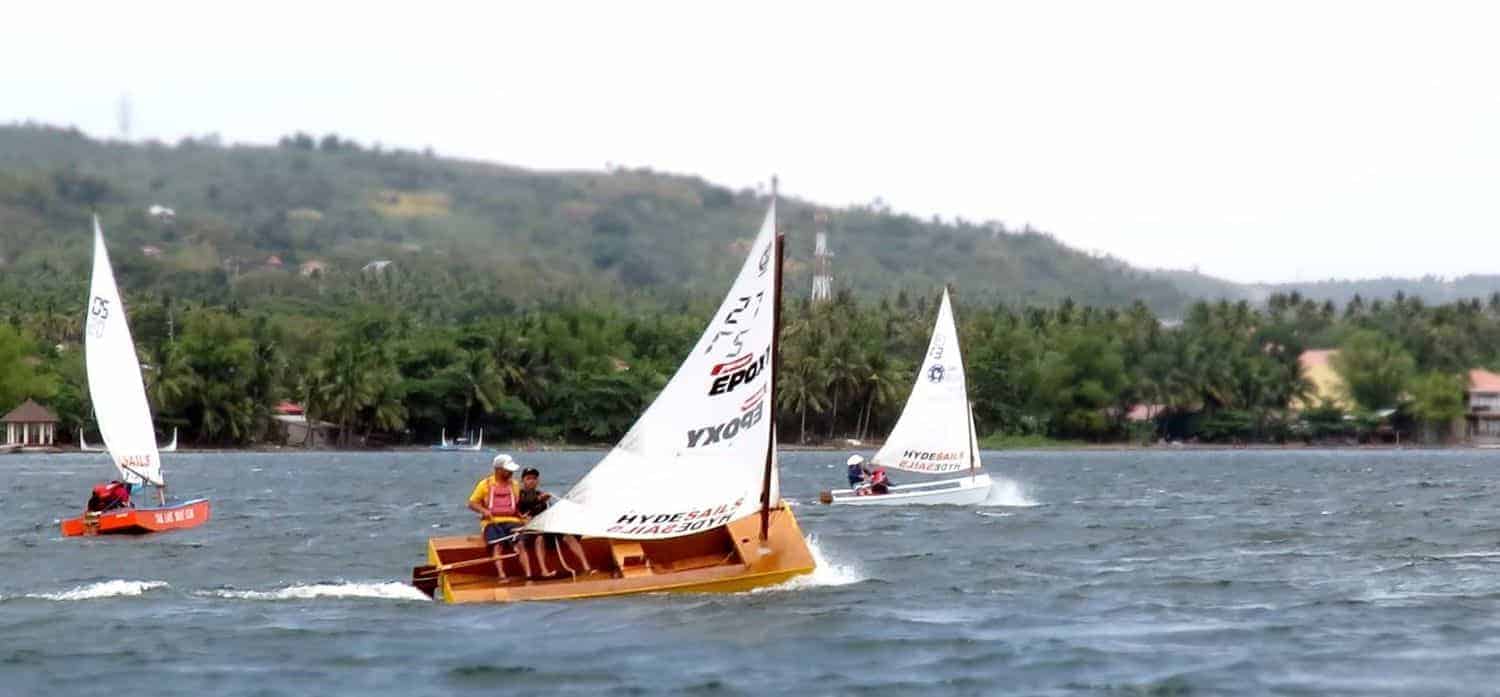
Big increase in upwind sailing performance and an easier way to teach beginners to sail upwind in medium to strong conditions. They end up being able to handle stronger winds with more confidence as well as sail faster.

“Sailing for balance” is an essential method to increase crew control of sailing boats in stronger winds when reaching across the wind as it maximises speed and reduces the forces trying to heel or tip the boat.

How introductory boats that were intended to be cheap have become crazy expensive. And forced sailing to contract. Hundreds of sailing clubs have disappeared in Australia alone. Sailing is now semi professional and elitist again.
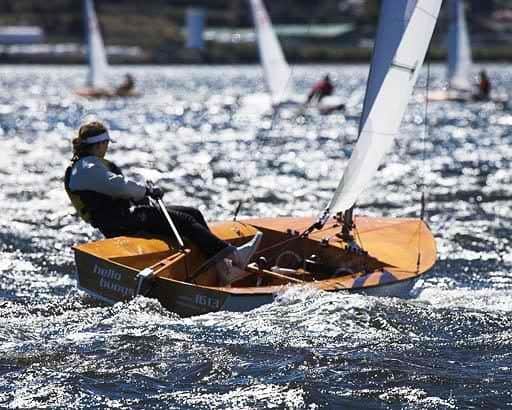
Racing shows that what you know is what you know. It doesn’t matter if the boat is less than perfect. So where is it best to put in the effort to improve results. Boat setup, knowing how to adjust for different wind conditions, practicing skills until they become automatic, sailing as much as possible … and teaching others.
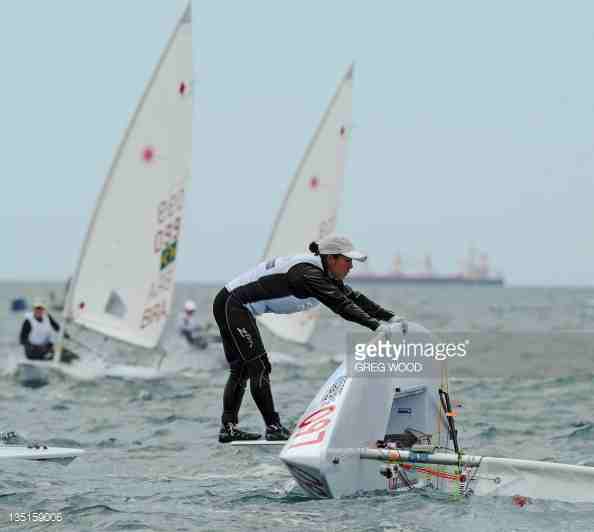
Three times in my life I have gone sailing in small boats without a lifejacket. Two times the boat sank. One time I capsized and found that swimming and trying to get back on the boat is very difficult in FRESH water. Also a hint about how to get kids to wear their lifejackets … wear YOURS!

Sailing lessons 1 1/2 hours south of Manila on beautiful, natural Taal Lake. Boats, SUP boards and instruction, food, accommodation and Volcano and Eco Knowledge tours.

In general I don’t like most sailing books and most sailing lessons.
I think that a learner doesn’t need to learn many new words. Also because they don’t explain the correct principles in the beginning their explanations become really complicated.
If you understand how to use a sail to get power – when it is at maximum power and when it isn’t it all becomes very logical.
