
OzRacerRV plan available – more simplification for 8ft sailing dinghy
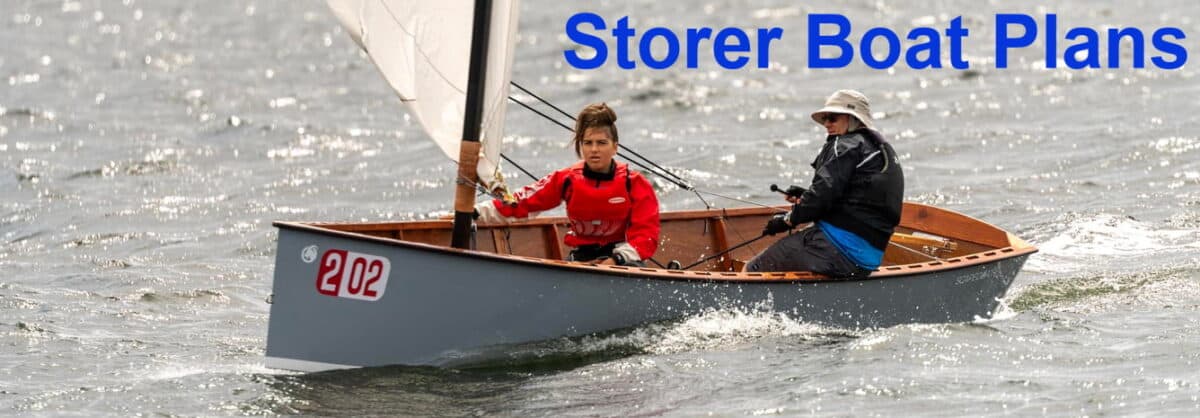
The new OzRacer RV is a much simpler build of the original OzRacer concept. It also is a direct relative of the slightly larger and much faster OZ Goose
Foils – design, building, sizing, optimisation
The new OzRacer RV is a much simpler build of the original OzRacer concept. It also is a direct relative of the slightly larger and much faster OZ Goose

The rudderbox design I use has distinct advantages over normal swinging rudder setups. Once you try this design you will never be satisfied with a swinging blade again. But some of the details are important!

Golfballs go further because of those dimples on the surface. Would it make sense to have those dimples on a boat hull?
It is not quite that simple as this little article attempts to explain.
One of the most important things as a designer or sailor is to keep an open mind, but also to be able to analyze things in light of real experience and prior knowledge. These are online and paper resources that force thinking in different ways.
This article, after a bit of a spiel, goes on to give some great resources that “opened my eyes” at different times in my life.
They focus on areas of structural design, sailing, sail aerodynamics and touch on a bit more.

There are lots of tips for building and designing boats on the net.
“Rules of thumb” are often quoted to help with the calculation of how much sail or how much keel or centreboard area or how big a mast is allowed to be and many other areas. Can a boat be stretched or shrunk or lengthened?
But how correct are they? Are they the best guide?

The conservative viewpoint is that traditional rigs are not very efficient. However allied to efficient hulls and set up correctly, lug and sprit rigs can be very efficient indeed – not too much slower than “modern” rigs, particularly when the same lessons are applied to trad sails and way cheaper.
This is a WIKI drawn from the group on the Storerboats forum discussions on setting up lug and sprit rigs for best performance building on the information in my webpage.

Reprint of an article I wrote a few years ago for Watercraft magazine in the UK.
The article points out why I think most of the discussion about boat design being a “compromise” is rubbish and taking that point of view means that the design is sure to be compromised.
What happens if we don’t accept the compromise?

Bruce in New South Wales, Australia has launched his Goat Island Skiff plywood sailing dinghy at Port Stephens.
They had a nice day sailing around but capsized the boat by accident when someone tripped up. Ooops.
I am still not sure who is to blame!
We are still waiting for launch day pics to be retrieved from the waterlogged camera.
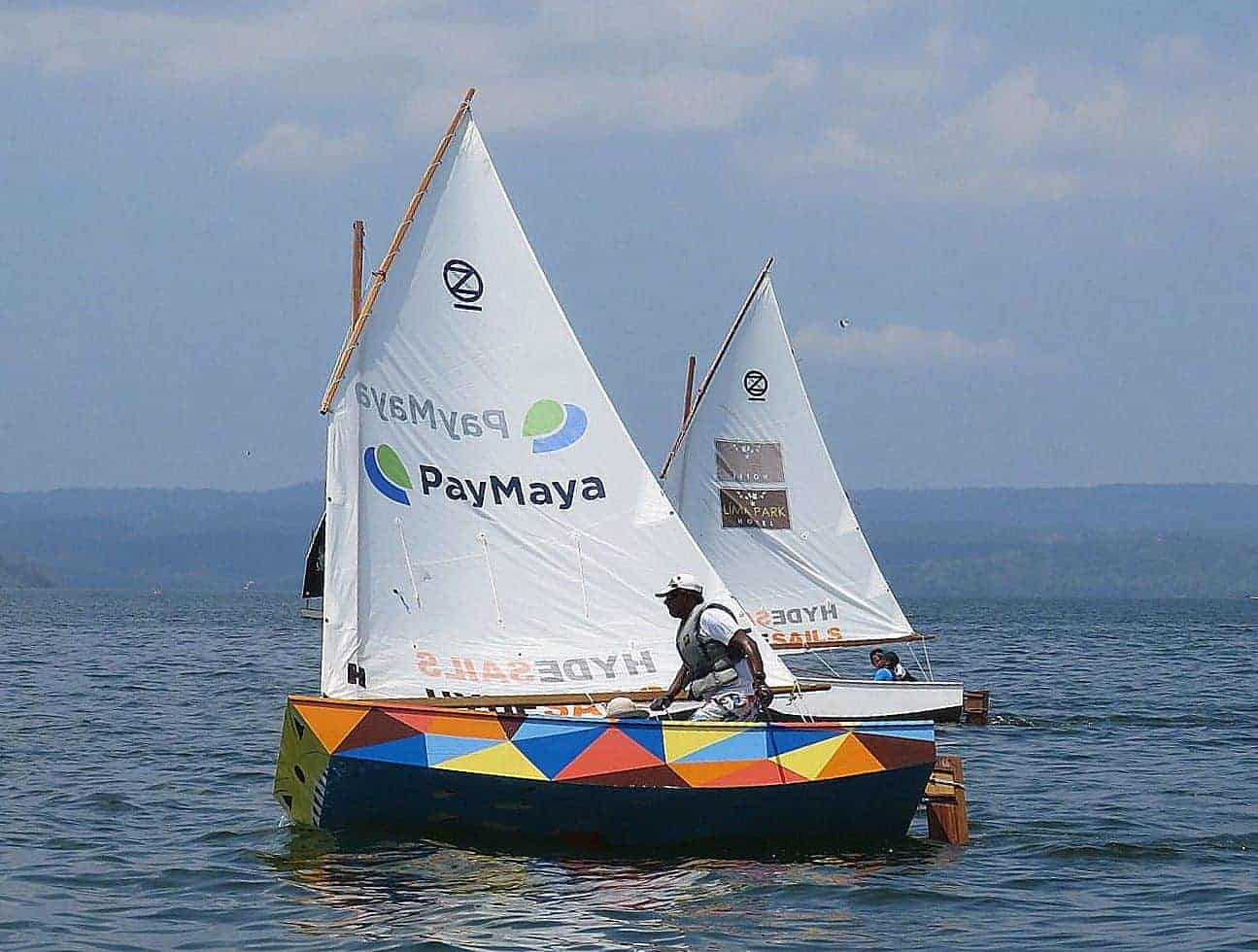
The discussion on this topic went on.
Dave asked if people would laugh if they saw a PDR sailing in company with something more conventionally shaped.
Luckily I had a video clip to hand.

A little bit of writing how form in boat design seldom follows function in terms of what “looks good”. It was prompted by a discussion about whether the PDR is good looking or not.
My Podcasts on design also cover this idea to a greater depth – they are in the menu at the top of each page.

This podcast/mp3 talks about why Australian (and New Zealand) wooden boatbuilding is different from the rest of the world..
Click to listen to the talk. This is the third of three.

This talk is the first hour of my exposition on boat building and design. There are two more parts to come. This covers some of the background and design issues. The second is more on the building side and the last is a bit more about why the Australian (and New Zealand) wooden boat tradition is different from the Northern Hemisphere.
You can stream the talks over your internet connection or download them as a podcast.

Gyula Ferencz has launched the second OZ Racer with the lug sail. He built his boat in Romania

Interview/Podcast with Michael Storer on why Australian boats are different, why traditional rigs have some distinct advantages.

Capsize recovery for home built boats. Particularly the popular Oz Goose and Oz Racer sailboats. The tips and tricks to righting a sailboat
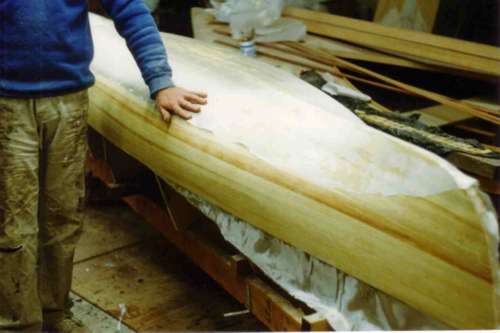
This is a basic section on the stages of fibreglassing areas on a plywood boat, canoe or SUP. Many problems can be avoided by being methodical and setting up each stage carefully rather than rushing in.

A first group build of OzRacers at Duck Flat Wooden Boats


