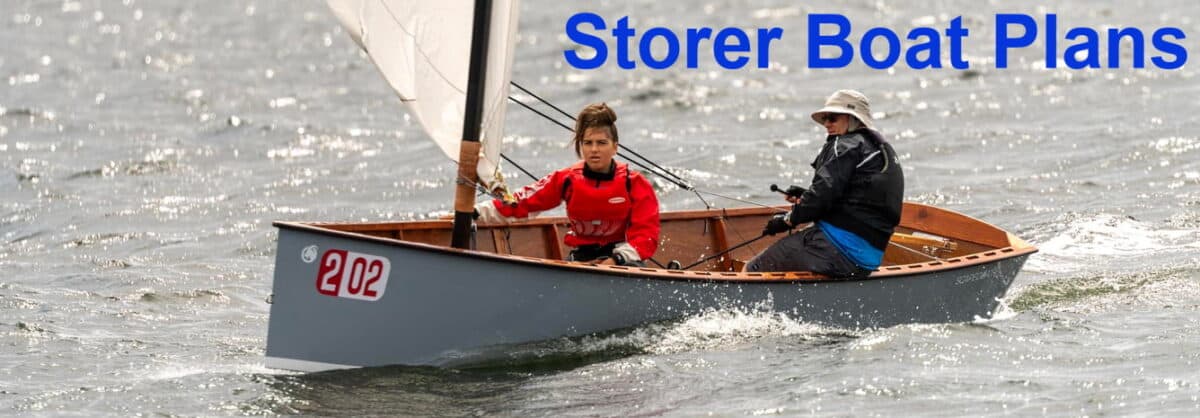
Using a carbon windsurfer mast yard on a lug rig sailboat can serve as a lightweight alternative to a traditional wooden yard. When adapted correctly, a section cut from a carbon mast offers suitable flexibility for controlling sail shape on boats like the Goat Island Skiff.
Andrew Softley on the Goat Island Skiff Facebook Group asked about replacing his standard wooden yard for the top of the sail with a piece cut from a used carbon windsurfer mast. More on the Goat Island Skiff here.
All our articles on setting up and tuning a lug rig are here
From cheap to sophisticated methods through to boat handling in rough conditions.
Windsurfer masts are not normally stiff enough for dinghy masts
Windsurf masts get around being very flexible by being heavily bent by windsurf sails. Also they are supported at shoulder level by the wishbone boom.
On a dinghy they are not prebent and are supported at deck level which increases the highest stress point on the mast by a factor of 4 to 6.
They may work for canoes that are not too beamy. But a regular sailing dinghy will either break them or sail poorly – dumping power by overbending before it is necessary to do so.
However a carbon windsurf mast can be ideal for the yard on a lug sail dinghy
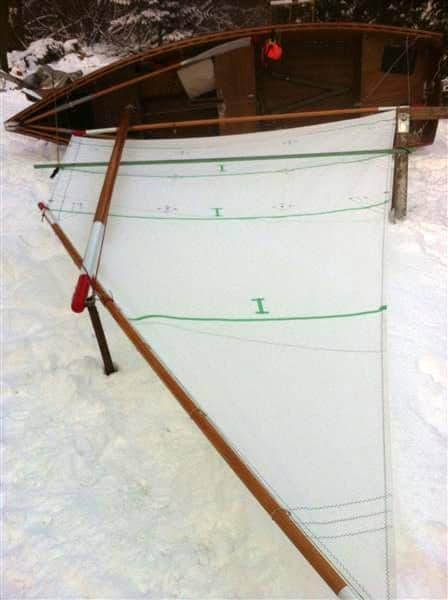
This photo is a static test to see the shape of the good value RSS Goat Island Skiff mainsail under normal tension. The yard bend is critical for defining the sail shape. it needs the right flexibility for the particular boat.
Yard too bendy and the top of the sail will be too flat and the boat will not accelerate well in gusts. Yard too stiff and the top of the sail will be too full and not depower in gusts.
A boom on the other hand can often make use of the stiffer end of a carbon mast. We use this idea for the Viola and Kombi canoes for those who don’t want to build a pretty wooden boom.
This is my take on it.
The general trend over the years for stiffness of the yard has been a slight increase.
Table of yard weight and stiffness records
We already have a database for yard bend – check this page for any updates (this data July 2019)
| Boat Owner | Yard Diam. | Material | Weight Spar | Deflect | Sail Maker/Yr | Notes |
| Christophe NH | 35mm | Douglas Fir | 57mm | Duckworks 2010 | a | |
| Christophe NH | Duckworks 2010 | b | ||||
| Woodeneye OZ | 40mm | Radiata Pine | 2.2kg | 47mm | Storm Bay Sails 2010 (Tas) | a |
| Woodeneye OZ | 40mm | Radiata Pine | 2.2kg | 50mm | Duckworks 2010 | b |
| Recommended Yard for Aluminium | 38mm | Aluminium 2mm wall | 2.13kg | Any | ||
Woodeneye OZ | 38mm | Aluminium 3mm wall Too heavy and too stiff. | 3.2kg | 20mm | 3mm wall is too stiff and heavy Recommend 2.5mm wall | g |
Ian Howick NZ | Taper 38mm -24mm | Carbon | 1.15kg | 20mm | Duckworks 2018 | c |
| Clint – Portland | 50mm | Eastern Spruce | 51mm | Duckworks 2015 | ||
BobWes Michigan | 40mm Hollow Box | Eastern Pine | 2.2kg | 35mm 12kg @ mid-point | SailRite (home sewn) | d e |
| George Isted | Taper 40mm-30 | Fir | 2.56 | 50mm | Sanders Lymington | f |
| Paul Hayslett | Taper 38mm | Old growth Fir | 2.6 | 42mm | Duckworks 2010 |
Notes
- a – original radiata yard
- b – radiata plus carbon tow – 2 x 1” wide tow top and bottom of yard.
- c – Carbon Yard: C-Tech New Zealand -38mm ID, tapering to 20mm ID at the tip. 1.8mm wall with some reinforcement at either end and the middle where the halyard attaches.
- d – four 15mm x 35mm staves lapped joined; 20mm hollow; end plugs and spacers used to support structure. 50mm x 50mm blank planed to 40mm x 40mm; 10mm walls
- e – Remeasured deflection using 15.9kg (35.05#) at 40% from forward end of yard and at the ¼, ½ and ¾ marks. Deflection at 40% = 33mm.
- f – Some block and leathering included in weight
- g – 3mm wall is too stiff and heavy for yards and booms on most boats of this size Recommend 2mm or 2.5mm wall

Calculating Flex for a Carbon Windsurfer Mast Yard
You have your existing yard which you should measure for bend – we have been using 10kg – usually 10 litres of water in a bucket. Then keep that same distance between the supports and move the windsurfer mast along until you find the section that matches your original bend.
The fat end of the chosen section goes forward at the throat. Additionally you will need to put a few wraps of 50mm wide glass tape at the ends and any place you want to drill a hole to prevent splitting.
Another important thing is the yard provides buoyancy during a capsize to prevent the boat from turning turtle. The goat just doesn’t want to turtle normally floating on its side. The ends of the yard will have to be sealed with some light ply plugs (they should be a easy fit, hammering will split the carbon) or even some foam with epoxy painted on the end.
Increasing stiffness compared to your current wooden yard.
If you feel your sail is too flat up top and/or it flattens out too early under the downhaul tension then you need to move the carbon spar until it is maybe 20% stiffer than your original yard. I’d be hesitant to go too far with a stiffer yard as we rely on the flexibility of the yard to make the boat accelerate in gusts rather than stagger.
So if you wanted a yard stiffer than the current I would recommend multiplying the deflection of the current one by 0.80 and then finding the part of the carbon mast that matches that. Or doing the same with an average of the standard yard deflections in the tables if you feel your current yard is too flexible to be a good standard to work from.
Faster Reefing Methods for Lug Rigs – developed by the Facebook Goat Island Skiff group. Simpler and faster than most alternatives.
We Design Boats and Sell plans. We also make sails
Click here for the range of Storer Boat Plans

Click Here to Find out about our Really Simple Sails for Homebuilt and Production boats
From Lugs to Laminates.

Michael, you continue to share very good info.
Thanks.
Mike
Interesting idea of replacing part of the yard with a bit salvaged from a windsurfer mast!
I have to educate myself here, too!
The world is full of knowledge one hs no knowledge about!
HI Tord,
Yes, while a windsurf mast is not strong enough as a mast for anything but small canoes, several Goat Island Skiffs have used the yard.
The yard needs to be more flexible than the mast – so is a great way to save weight in this critical area. But the bend has to match the standard yard bend – and we have figures from several boats and a method in the article.
It even became the standard method for getting the yard and boom for the lug rig version of the Viola 14 Sailing Canoe – the sails have been cut to match.
We have a lot of cool lug stuff. Have you seen our Page of resources on Lug Rigs – 20 articles on ideas and improvements.
Best wishes
Michael