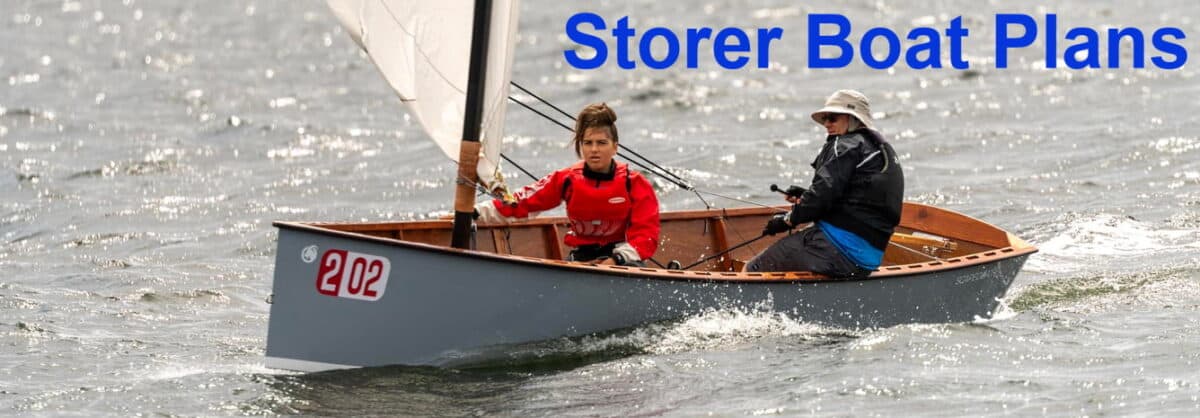
Many beginners want to get their own boat after learning to sail. Choosing a secondhand sailboat offers an affordable, reliable path onto the water without high depreciation, provided you select a proven, complete design.
The two best options are below – this page concentrates on the second one!
You can build one of my boats from my detailed boat plan books (I know … you were expecting me to say that!). Building a boat is a cost-effective solution if the boat is designed with care to save you money along the way. You get a much cheaper boat than a professionally built boat and will cover your building costs (or be close to it) when you go to sell the boat.
1/ Build a boat – there are other options below!
See our Boat Plans – one might suit you!
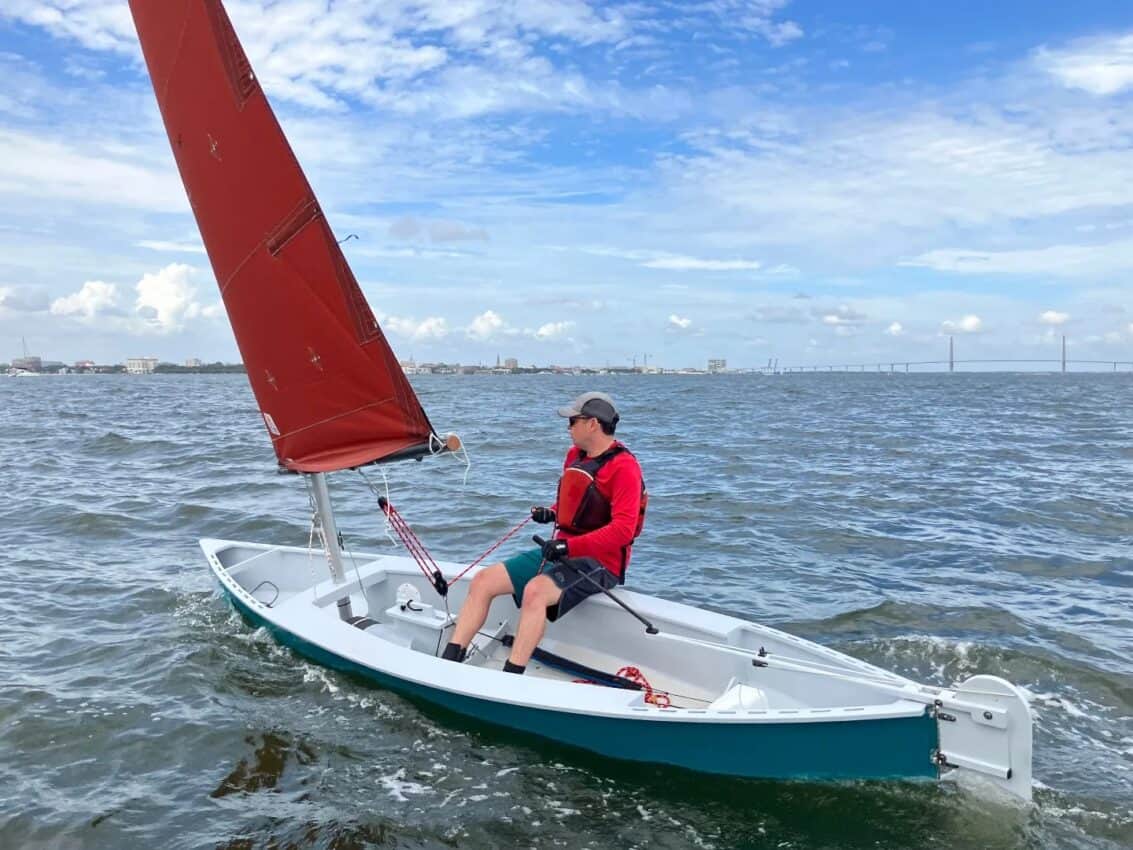

2/ Buy a used Racing boat – tips and tricks to find a good one
Another cost effective solution is to buy a second hand racing boat. There are a number of articles about restoring and repairing wooden boats in the Q & A section. Don’t overdo it and don’t sink too much money into an old boat though. It should be good enough to be test sailed and come back to the beach without significant water in the buoyancy tanks.
Photo below. Our second Oz Goose Fleet in the Philippines. 10 boats in Cebu. 18 in Luzon and another ten in Davao this year 2017.

A good way to get started is to pick up a second hand racing dinghy.
The really good reason for this is that if you choose carefully you can have a year of sailing and then sell the boat for just about as much as you bought it for.
The main trick is about the price range. Not too expensive and not too cheap.
- A boat that is expensive for its type will devalue.
- A boat that is too cheap will have breakages and cost money.
- What you want is a boat that is “Just Right”
Maybe something from as small and simple as a Mirror Dinghy to something in the 14ft range for about AUS$1000 to $1500 (Sterling 400- 600 US$ 750 to 1300 – just translating from the situation in Australia – some locals may have a better idea). The beauty is that when you go to sell it you will get almost the same money back.
Sabre Dinghy – single handed but affordable with active sailing in many states.

Heron Dinghy – excellent for family sailing. Still sails well with couple adults and a couple kids. But most fun with adult/child or a couple of teens.

Mirror Dinghy – one of the most popular sailing dinghies in the world – as long as adult sailors are not too large.

Laser/ILCA Dinghy – available at a wind range of price points.

NS14 Dinghy – performance family sailing

Cherub – exciting for a couple of motivated teens
Finding Your Boat
Talk with local sailors to find out what ones are stable enough for beginners. Local sailing clubs with small boat divisions are often very helpful and may have lists of boats for sale too.
Often the more common boats have a Class Association which may have a list of secondhand boats.
Choose something popular in your club, area or nearby – it ensures a wide choice of boats and that you will be able to sell the boat later. Also you will have ready access to advice from more experienced sailors
Some pointers on buying a secondhand boat
Recent use
Find one that has been raced recently-it will still work well
Sails can be the single most expensive item
Make sure the sails are OK – these are expensive to replace so you want to find a boat with OK sails so you can sell it with the same set after a year or two. The sails should be clean, the fabric should feel quite stiff. The sails should be well folded or rolled. If they are just stuffed in a bag – walk away. The only exception is with spinnakers – these are of a different type of cloth and they don’t mind being stuffed in a bag. Spinnaker cloth should make a loud rustling sound when you move the sail about in the bag or handle it.
Seek Local Advice
Talk with local sailors (sailing clubs with a small boat division/s) to find out what ones are stable enough for beginners. Local sailing clubs with small boat divisions are often very helpful and may have lists of boats for sale too.
In Australia some good choices are common boats, some types that may be common in your area are
One person boats – Sabre, Laser*, Moth Lowrider.
Two person boats – 420, Heron, Mirror (unless you and your crew are heavy adults), Flying 11 for teens (NSW). Tasar/NS14 which is raced by two adults (a bit more expensive about $2500 is the sweet point). For trapeze boats with spinnakers – Cherub, 29er
( * The laser now called the ILCA is very robust and very simple, but it can be hard for one person to sail in strong winds until you get used to it. With all boats it is important to choose weather conditions that you know you can handle OK. One advantage of the Laser is that there are a lot of cheap ones around and there is not a lot that can go wrong with them apart from worn out sails or lost gear. Gear for Lasers is very expensive because you can only buy it from one company – so make sure the boat is in good condition and all there. You can buy after market “Club/Training equipment but while a local club probably won’t mind it is not legal for racing at state or national level)
Join A Local Sailing Club – or just go along to have a look and say Hi
In General Sailing Clubs are very welcoming to interested people. Particularly small boat and dinghy sailing clubs. Lower expense means there are people at all levels of experience.
Yacht clubs can be welcoming too. But are not a good pathway to learning to sail in terms of having your own boat because it is a much larger investment. They are a great place to get crewing experience.
Test Sail and learning
Evaluating Hull Condition When Choosing a Secondhand Sailboat
Ask the prospective vendor to take you out for a sail before the sale. Everything should go together easily on the shore and work OK afloat. The vendor should appear like they know what they are doing (indicates the boat will be in good operating condition). You will find out if the boat leaks (check inside the watertight tanks after the sail – there is a drainage bung and/or an inspection port to drain or bail water).
If you really want to get a grasp of the sailing thing consider getting some lessons and/or racing the boat for a year or two with a local club. You will learn really quickly because they tell you where to go rather than you choosing what is easiest and there is a lot of advice available.
Sometimes an on the water trial is not possible but see if the vendor is happy to rig the boat for you and you can video the process. Someone who knows the boat well will be able to rig quickly and efficiently if the boat is well sorted out. If items look clumsy, tangled or it looks like the owner is trying to work stuff out … maybe the boat has not been cared for very well and gear might be mixed up or missing. Or take a friend who already knows a lot about sailing to check out the boat with you.
Repair an old boat
I would generally avoid a fix-it-up project unless you know a lot about sailing already. Someone with little experience will spend too much money on areas where you don’t need to spend much and won’t spend enough money on areas that really need it – they just do not know the difference at this point.
Fix ’em ups also often have a mix of non matching gear and missing items. This is why I point STRONGLY to finding boats that are being used regularly.
If starting from a low knowledge base a fixed up boat will have many setup mistakes and may not work very well at all or have some serious flaws in setup that make it difficult or unpleasant to sail. It may be so depressing that you give up this wonderful sport/pastime.
So for beginners get the best boat of a common type you can afford that works now.
Just to get an idea of the situations that people can get into with older boats have a look at this page about repairing or restoring older sailing dinghies and just how much labour and learning might be necessary to get the boat going.
Fixing up old sailing dinghies
However the dismal reality is people buy a fix it up … start stripping paint and removing fittings and the boat never sees them again and it gets sold as a part complete project. I would strongly strongly dissuade you from getting into this process.
Buy a boat that “is only missing a couple of Pieces”
This is another time waster generally.
Some think they can mix and match and find other second hand gear from other boats. The result is normally a disappointing hybrid that never works well and is not fun to sail.
The myths:
- You can pick up a cheap set of sails – sails for a single sail boat are around $600 to $1000. For a two sail boat add another $600. If it is a really common type then you might be able to buy hand me down sails from a boat of the same type. Sails not for the type of boat are very difficult for a beginning sailor to get right. The ratio of the front sail to the back and the location of the centre of each sail is critical for good and safe handling.
- Missing Mast – A replacement mast is in the range of 800 to 2500 without fittings. It is difficult to swap between types of boat because every fitting on the mast is in the right place for the original boat and using a mast from a different type of boat is very complicated and again will probably result in something that is unpleasant and unreliable to sail.
- Missing Rudder or Centreboard – The rudder is probably easiest to replace. Some used ones may fit, check first or it is possible to make one. Centreboard may have to fit particular space built into the hull. Wrong one will again make the boat hard to sail.
- Many missing fittings and ropes – Ropes are probably the easiest things to replace and are not too expensive these days. But get marine ropes and advice from experienced sailors. Missing fittings can quickly add up … missing mainsheet block for most dinghies $40 to $80 each and much more. If the boat has a lot of fittings wires and ropes there may be a lot of expenditure required.
If you want to build your own boat see our boat Plans or discuss with others in our facebook groups
See our Boat Plans on this website
See our helpful Facebook Groups to ask questions and see discussions.
General Storer Boat Plans Group
Oz Goose Group
Goat Island Skiff Group

Anchor text with initial capital: Guide to Restoring and Repairing Wooden Boats
Replacing the bottom of a Plywood Dinghy the fast way – overnight!!