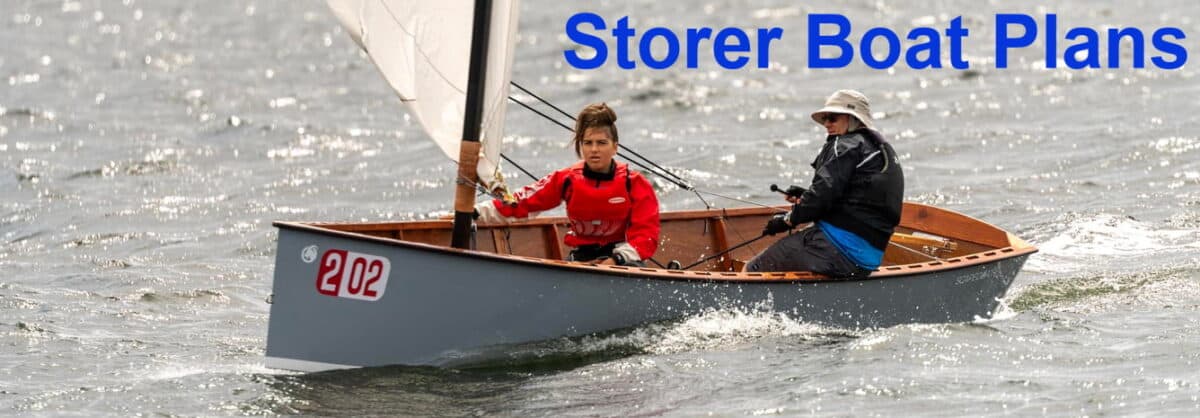
We cover the advantages epoxy fillet construction offers over timber framing when building the light, simply structured OZ Goose Sailing Dinghy. The best choice often depends on your location and costs of available materials.
Answers are different in different parts of the world.

Why Filleted Construction for Plywood sailing dinghies?
Michael McGlynn is building his goose in Kansas. He sent the first photos of a filleted hull. More below. And Facebook link if you want to follow up progress.

The plans do contain both options.
- Timber Framing Construction
- Epoxy Fillet Construction
Read the plans carefully as there is one area that needs to be setup to be a bit stronger in the cockpit area. Additional strength is required for foot traffic areas which are the highest forces pushing the bottom of the boat down. A small amount of glass taping removes this risk. Refer the plan.
Where timber is cheap and locally available (North America) it makes sense to use timber. It does require a fair bit of framing up. But the easy labour keeps the cost down. Most framing is square except at the ends of the boat. (More on Filleting Method including the plastic bag method)
Filleting is incredibly fast if well prepared – Video
Use Masking tape to limit mess
If the fillets are visible we strongly recommend using masking tape to reduce the mess. If the panels have been precoated then that simplifies cleanup too. here the fillets are already shaped – see below for the shaping.

Applying the fillet is very fast.
This boat is not an Oz Goose, but is shows just how quick fillet application is. The aim is to empty the bag in one hit.
This is because epoxy mix sitting in the bag will overheat because of the exothermic reaction. So the runaway increase in heat reduces the available work time. If the epoxy is out of the bag in the right place waiting to be shaped the volume is much more spread out so there is a lot of working time.
This boat is not an Oz Goose, but an experimental dinghy. We are looking at the inside of the boat so we have not applied the masking tape in this case.

Video image can take a moment to load.
Shaping/Tidying the Epoxy Fillet
Once the bag is empty then shape the section using the filleting tool made from scrap ply. The radius is nor

Final step is cleaning up any mess and re-using the ooze to fix any Starved Areas.
We use a scrap piece of ply or wood sharpened like a chisel and a piece of scrap ply as a palette to collect the excess.
It is a really effective and zero cost tool. Don’t use a real chisel or it is a pain to clean up, plus if it is sharp it will dig into the wood.
Looking at Framing a sailing dinghy in comparison
We still use timber to distribute some of the concentrated loads of the rig, centrecase and rudder into the filleted hull
But for countries where timber is cheap and labour is relatively cheap or volunteer then timber may make more sense.
Epoxy filleting does have a cost. And framing does dramatically reduce the volume of epoxy needed.
Additionally some people may have an epoxy Allergy
I wrote an article about epoxy allergies here and methods of managing.
Framing to hold the hull together is mostly eliminated by using epoxy fillets. By looking at this stack of 10 boats for one of our group builds you can see that there is quite a bit of framing involved.


Timber not eliminated is to attach the deck and functional bits like the mast step and partner to support the mast and around the centrecase.
The important principle is that these timber pieces get the loads from the mast and the centreboard into the plywood. So, the joins below are awaiting for the deck to distribute the loads over wide areas.

Filleting can help keep the cost down where timber or transport is expensive (Australia or Europe).
Stitch and glue plywood boat construction can be simplified for some shapes
The idea of the Goose was partially to put the boat together with minimal cable ties (there is not a lot of stress in curving the ply). Use Duct tape or gaffer tape to hold the chines together while the fillets are done. (Do tests with different brands of tape before trusting it). This means the interior of the boat ends up very clean. There are few cable ties to work around with the epoxy filleting.
This is not possible with many designs with much twist in the panels which adds considerable loads to the joins. The Oz Goose and the Quick Canoe are designed around relaxed panel configurations.

This leaves an exceptionally clean interior for fast filleting as we can see from Michael McGlynn’s build in Kansas. And his fillets are excptionally nice fillets.
Mine are more workmanlike. I’d do the ones in the tank fast and the ones you can see as neat as Michael’s (hopefully).

Michael really has done a very nice job.

Oz Goose Group on Facebook
Oz Goose Website with lots of building and rigging and sailing tips
Buy Oz Goose Plans $36
Buy Oz Goose Fittings and Ropes
