Where restoring or building a traditionally built boat it is important to replace parts of the structure of a similar size to those that are being replaced or missing – Those sizes are termed “scantlings” – for traditionally built workboats in Australia the reference is the USL Code.
It would probably be OK for traditionally built workboats in other parts of the world.
Here I give a bit of a spiel about what it is and how to use it.
There are different codes applicable to traditionally built sailboats. Common ones there are Herreshoff’s rules or Nevin’s rules. Or for modern boats the ABS (American Bureau of Shipping) code.
How thick should a deck be on a small traditional Sydney Harbour Ferry
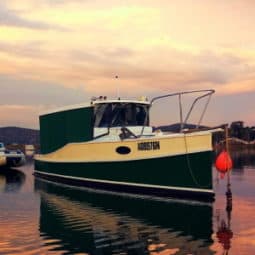
Here were some fellows restoring a 35ft Sydney harbour ferry. Maybe a bit like this one. These small ferries ran a lot of the smaller routes from the 1920s to when they started to be uneconomic in the 1970s.

The Boat above is not Darren’s boat but one called the Mt Pleasant. The story of the restoration of this small Sydney Harbour Ferry is online.
Darren’s boat had been part “restored” by some people who had removed and replaced structure without researching what was normal resulting in decks that were far too light. And also had used materials of inconsistent thickness. Amateur hour.
Darren wanted to fix it properly.
Darren’s problem – a half restored boat with some things done poorly
Originally Posted by darrenyorston
I am not sure how thick the deck is however there are a couple other areas where I can see the thickness and I would say either 6 or 8mm. Could be different though as they are on a different part of the deck.
That sounds WAY too thin – would expect 3/4 or thicker ply or even thicker planks for a boat this size.
Despite the archaic nature of the document the USL code will give you a lot of info regarding the minimum dimensions of different parts.
Download here – USL Wooden – hybrid code 2010
Open the document and go straight to the tables. Note that they often give alternatives of using either timber planking or ply for different parts. Read the notes under each table carefully before using its contents.
It will give the right sizes for a trawler and suggest the pieces that might be missing – but will be to heavy for a yacht or light motorboat. The USL assumes heavy displacement with large hull depth and beam for the length. If boats are long but don’t have such a large cross section; multihulls or light displacement yachts or powerboats; then it will overestimate the sizes needed for almost every part.
But for workboats of normal traditional proportions it is perfect.

Maybe the Surveyor lapsed if they didn’t notice the deck thickness
Back to Darren’s Ferry.
The thinness of the decks may indicate that some of the work was done by people who didn’t know what they were doing – so I would suggest doing some study so that you know how things should be done in this style of boat. (Rabl’s book on Wooden Boat Construction would be a good start – also the one by Bud McIntosh).
It also might call into question the knowledge of the surveyor – if he didn’t notice the decks were only 6 or 8mm – yet suggested that you go ahead and repair them. He really should have realised that they were too thin. Check the USL code above – I think you will find that they should be around 3/4″ ply or thicker for your length of boat.
There are some short cuts if you use epoxy – but dowload for free the West Systems “Guide to wooden boat restoration and repair” – a free download that will show how to repair ribs etc without upsetting the existing structure. This is possible in the case of the decks only.
Is it worth doing the full restoration in Epoxy? Maybe not.
I probably wouldn’t suggest going the whole epoxy hog with your boat – but if you put down a properly engineered ply deck and substructure all glued together with epoxy then any upper works etc could also be modern epoxy/timber construction.
But without looking at it I would be recommending traditional fixes for any issues with the main hull and its internals. The assumption with traditional structures is that they will soak up water to make the boat watertight. Epoxy coating would prevent that.
Which is why I am recommending only dealing with the decks and structure above that in the modern way. And the hull and internals remain traditional.
Historically we see that one of the great improvements of traditional boat construction was as plywood decks started to replace traditional decks. Finally decks that need not leak at all.
Even Francis Herreshoff, who had little good to say about plywood in the early days “stinkwood”, grudgingly admitted that plywood was a good material for decks and relieved the rest of the structure from carrying quite a lot of load.